Altar Servers
Roles, Duties, & Responsibilities
An altar server at a Catholic Mass functions as a vital lay assistant to the priest and deacon, ensuring the liturgical celebration flows smoothly, reverently, and without distraction. By fulfilling these duties, servers help the congregation focus entirely on prayer and worship. [1, 2, 3]
The core responsibilities and duties of an altar server are structured chronologically across the parts of the Mass: [1, 2]
1. Before Mass Begins
- Arrive Early: Servers typically arrive 15 to 20 minutes before Mass to prepare. [1, 2, 3]
- Vest in Liturgical Attire: They vest in a traditional alb (white robe) with a cincture (cord belt), or a cassock (black robe) with a surplice (white over-garment). [1, 2, 3]
- Prepare the Sanctuary: They light the altar candles, prepare the processional cross, and ensure liturgical items like the Roman Missal (prayer book) are in their proper places. [1, 2]
2. The Introductory Rites
- Lead the Entrance Procession: The cross-bearer (Crucifer) leads the procession into the church, followed directly by the candle-bearers (Acolytes) holding processional candles. [1, 2, 3]
- Hold the Roman Missal: During the opening prayers, a server holds the heavy Roman Missal open at chest height for the priest so his hands remain free to gesture. [1, 2, 3]
3. Liturgy of the Word
- Maintain Prayerful Posture: While the scripture readings occur, servers sit attentively in the sanctuary, serving as behavioral role models for the congregation by keeping their hands folded in prayer. [1, 2]
- Assist with the Gospel: On solemn occasions, servers carry processional candles or a thurible (incense vessel) to the ambo (pulpit) for the reading of the Gospel. [1, 2]
4. Liturgy of the Eucharist (The Offertory & Consecration)
- Prepare the Altar: Servers assist the deacon or priest by bringing up the corporal (altar cloth), chalice, paten (communion plate), and purificator cloths.
- Receive the Gifts: They stand with the priest to receive the bread and wine brought forward by the congregation during the Offertory procession.
- The Lavabo (Washing of Hands): A server pours water over the priest’s hands into a bowl and presents a finger towel so the priest can ritually cleanse his hands before the consecration.
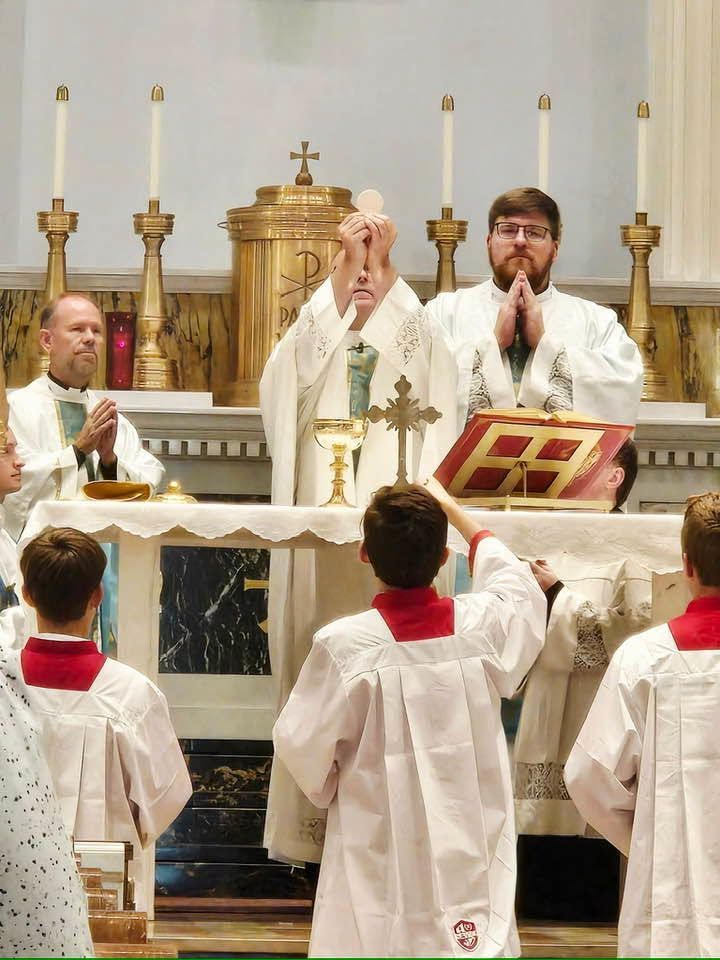
- Ring the Altar Bells: During the Epiclesis (calling down the Holy Spirit) and the elevation of the Host and Chalice, a server rings the sanctuary bells to draw the assembly's attention to the transubstantiation. [1, 2, 3, 4, 5, 6, 7]
5. Concluding Rites & After Mass
- Clear the Altar: After Communion, servers assist the clergy in clearing the sacred vessels from the altar and returning them to the credence table. [1, 2]
- Lead the Recessional: Servers retrieve the processional cross and candles, leading the priest and deacon out of the church in the same orderly fashion as they entered. [1, 2]
- Post-Mass Cleanup: They return to the sacristy for a closing prayer, extinguish the altar candles using a proper snuffer tool, and neatly hang up their vestments. [1, 2, 3]
If you are looking into this ministry for yourself or a child, let me know:
- The age or school grade of the person interested
- Whether they have already received their First Holy Communion [1, 2, 3, 4]
I can provide information on typical training requirements and parish expectations. [1, 2]
Altar Servers - Vestments
In the Catholic Church, altar servers most commonly wear black or red robes (called cassocks), but they can also wear white (called albs), and occasionally purple or green. The choice depends entirely on parish tradition, local custom, the age of the server, or the specific liturgical season. [1, 2, 3, 4]
The Two Common Vestment Styles
Before looking at colors, it helps to understand that altar server garments generally come in two styles, which changes how colors are displayed: [1, 2, 3, 4]
- Cassock and Surplice: A long, tailored, button-down robe (the cassock) worn under a shorter, white, flowy vestment (the surplice). The colored part you see is the cassock. [1, 2]
- Alb: A single, full-length white robe that covers the street clothes entirely. It is tied at the waist with a rope belt called a cincture. [1, 2, 3, 4, 5]
Altar Server Robe Colors
- Black: This is the traditional, standard color used for cassocks in most Roman Catholic parishes. It symbolizes a servant's humility, dying to the self, and commitment to the church. Parishes often use black year-round as a neutral option. [1, 2, 3, 4, 5]
- Red: Red cassocks are very popular, especially for youth altar servers. Many parishes use them exclusively for young servers to bring a vibrant energy to the sanctuary. Other parishes save red robes specifically for special feast days like Pentecost, Palm Sunday, and feasts of martyrs to represent the fire of the Holy Spirit and the blood of Christ.
- [1, 2, 3, 4, 5, 6]
- White: White is worn in the form of an alb. It represents the purity of baptism and new life. White albs are common in modern parishes and are frequently preferred for adult altar servers or at joyful celebrations like weddings, Easter, and Christmas. [1, 2, 3, 4, 5]
- Purple / Violet: Less common, but some parishes keep purple cassocks to match penitential liturgical seasons like Lent and Advent. It symbolizes preparation and repentance. [1, 2]
- Green: Rarely, a parish may use green cassocks during Ordinary Time to symbolize spiritual growth and life. [1, 2, 3]
The Role of the Cincture (Belt) Color
If a parish chooses to use the all-white alb style instead of colored cassocks, the altar servers will instead change the color of their cincture (the braided rope belt) to match the exact liturgical color the priest is wearing that day. [1, 2]
- Green: Worn during Ordinary Time.
- Purple: Worn during Advent and Lent.
- White or Gold: Worn during Christmas and Easter seasons.
- Red: Worn on Good Friday, Pentecost, and feasts of martyrs. [1, 2, 3]
If you are wondering about a specific upcoming church event or parish rule, I can give you more details if you let me know:
- Is your parish more traditional or modern?
- Are the servers children or adults?
- What liturgical season or special event (e.g., Easter, a funeral, a wedding) is coming up?
At Our Lady of Hope Catholic Church
Altar Servers - Stewardship Newsletter Article
The Men's Choir is open to all men of high school age or older. We welcome other male Parishioner's with musical talents to consider joining this choir.
The Men's Choir usually sings during the second Sunday of each month at the 9:00 am mass. Also, on Good Friday.
If interested in joining one of Our Lady of Hope's Music Ministry groups,
please contact
Laura Litwiler, Music Ministry Leader
llitwiler@evdio.org
Diocese holds fifth annual Master of Ceremonies camp
July 31, 2025 wpmessage
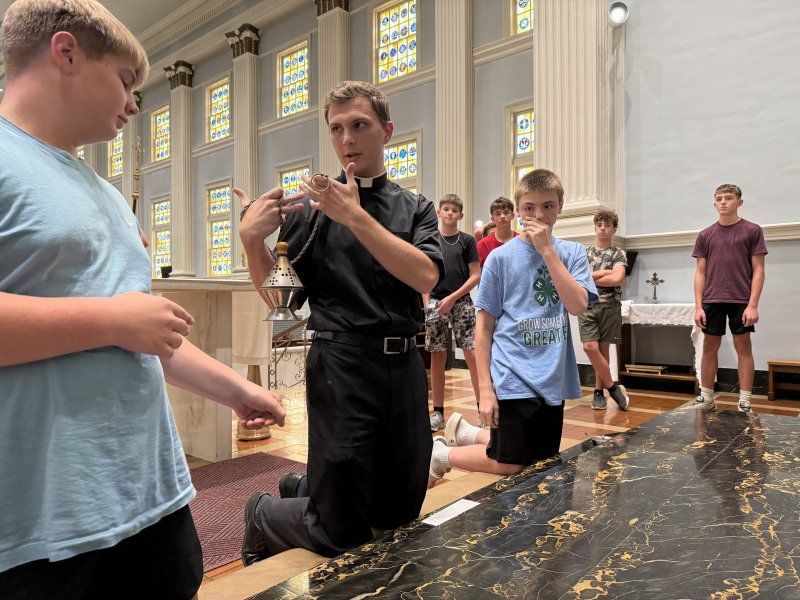
Seminarian Chase Riecker, second from left, instructs camp attendees during the Mater of Ceremonies camp at Sacred Heart Church. Submitted photo
By John Rohlf, The Message assistant editor
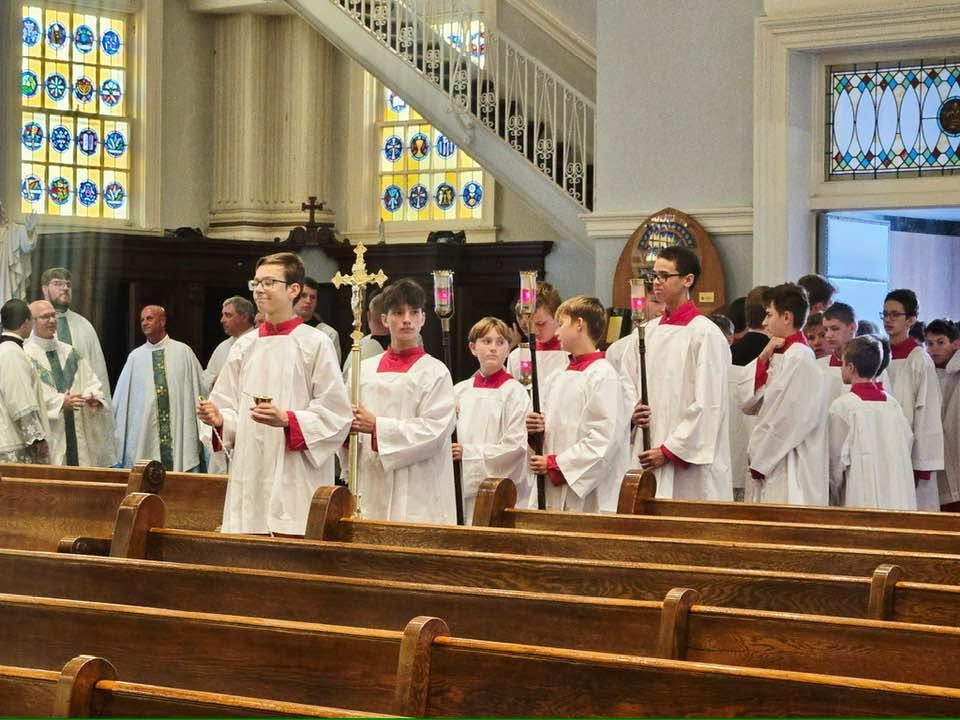
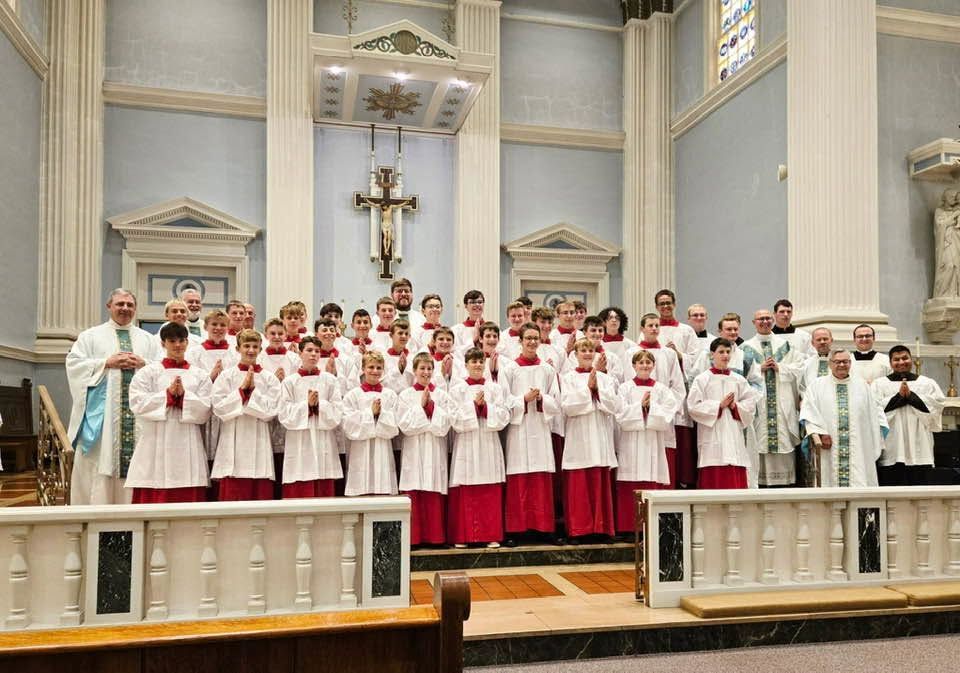
More than two dozen young men recently participated in the Master of Ceremonies Training Camp at Sacred Heart Church in Evansville.
The fifth annual event was led by Diocese of Evansville Seminarians Jack Martin and Evan Sexton. The participants were nominated by their pastors from 14 diocesan parishes to spend three days in classes, practicum sessions and in prayer learning how to facilitate and assist at liturgies more effectively. Participants were in grades 8-10.
“Overall, I thought the camp was a success,” Sexton said. “The guys that went seemed to have a lot of fun and really improved their knowledge surrounding the Liturgy… Additionally, the participants took the opportunity to create new friendships that expanded further than just their parish or high school.”
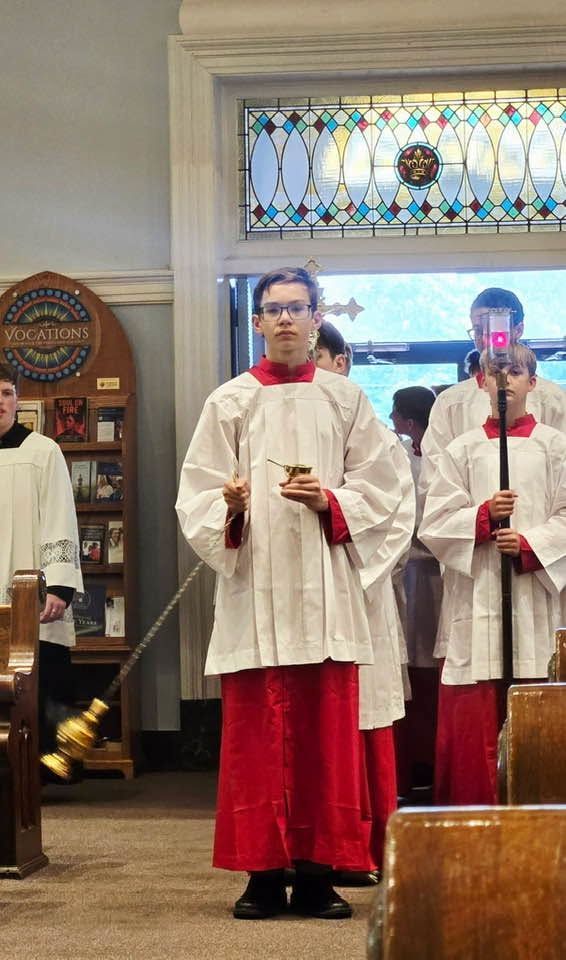
The participants in the Master of Ceremonies camp went through four practicums during the three-day camp, Martin said. They were taught how to use the Roman Missal and the Ordo, how to use and prepare incense, how to organize processions, how to prepare the sacred vessels for Mass, the names of the liturgical objects and vestments and more. Father Nick Biever, Father Tyler Tenbarge, Father Tyler Underhill, Father Alex Zenthoefer and Seminarian Jacob Schneider delivered talks to camp participants about the history of the liturgy, the parts of the Mass, how Mass is heaven on earth and how serving and the liturgy can aid in discernment.
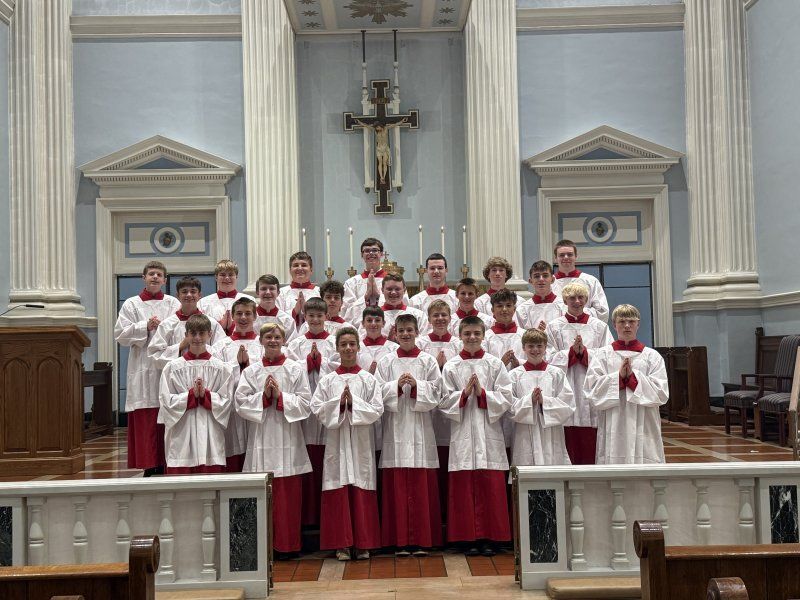
Martin said 26 young men completed the training and received their red cassock and Surplice. The participants learned a lot about the liturgy and it showed in many ways, including through the liturgy tests and small side comments and conversations, he said.
“The participants come away with greater knowledge and love for the Church’s liturgy,” Martin said. “What was taught to these guys was not just head knowledge, but rather a knowledge that allows them to grow in a deeper relationship with Jesus Christ and the Church.”
Martin said the participants are now able to go back to their parishes with a greater knowledge of the liturgy to help their pastor and parish community in worship.
“They act as witnesses to the great mysteries of heaven, and every parish community needs to see that taken seriously, especially by the youth,” Martin said. “I have heard many people say how much better they pray when these guys are serving and leading at the Lord’s altar.”
Corde Leinenbach, parishioner at St. Mary Parish in Ireland, was one of the 26 young men to complete the training. He said the training was “super beneficial to me.” He is now able to be a bigger part of what goes on during Mass.
“Before I attended, I thought that I knew a lot about serving,” Leinenbach said. “But now I am surprised by how many things I did not know. Now, I am super excited to bring the many new things that I learned back home to St. Mary Parish in Ireland.”
A parishioner at Holy Redeemer Parish in Evansville, camp participant Noah Schroeder thought the camp was well-run. He learned a lot of new serving skills and information he can use to at Masses in the diocese, he said.
“I also had fun being with other guys in the diocese, whether they were being trained or helping with the camp,” Schroeder said. “I appreciate the opportunity to participate and look forward to using what I learned during future Masses.”
The Master of Ceremonies Training Camp was launched in 2021 to assist pastors in having better liturgies in parishes across the diocese. Each year, more than 20 young men have been trained. There are now more than 100 alumni of the program.
Twenty-six young men in grades 8-10 recently completed the Master of Ceremonies camp.

July 17, 2026
July 17, 2026
Catholic Community of Washington
·
Congratulations Ward for completing the Master of Ceremonies Training Camp at Sacred Heart Church in Evansville
Ministry Sign-Up
"What do you want of me Lord? Where do you want me to serve You?"